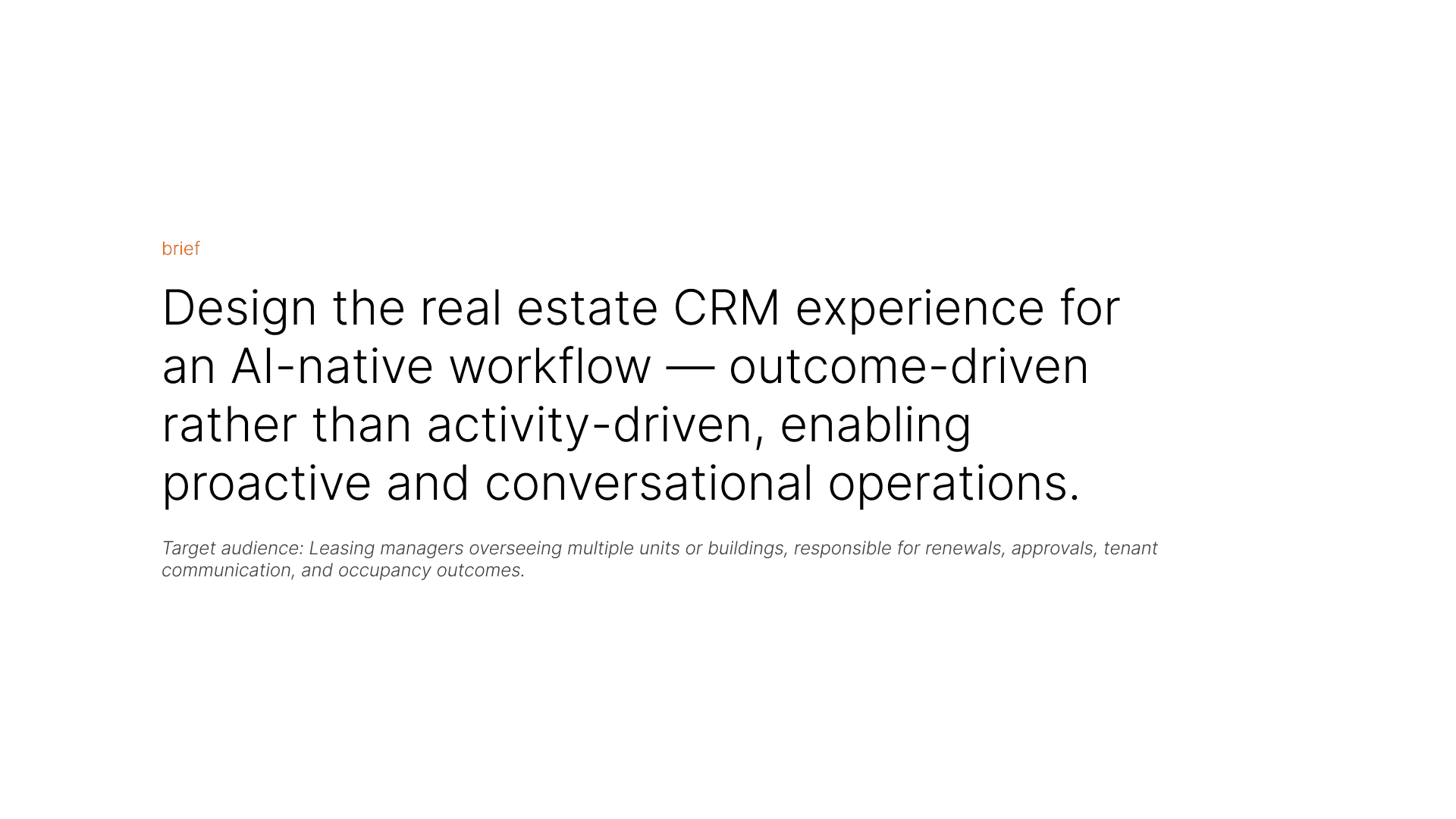

When CRM software understands the work
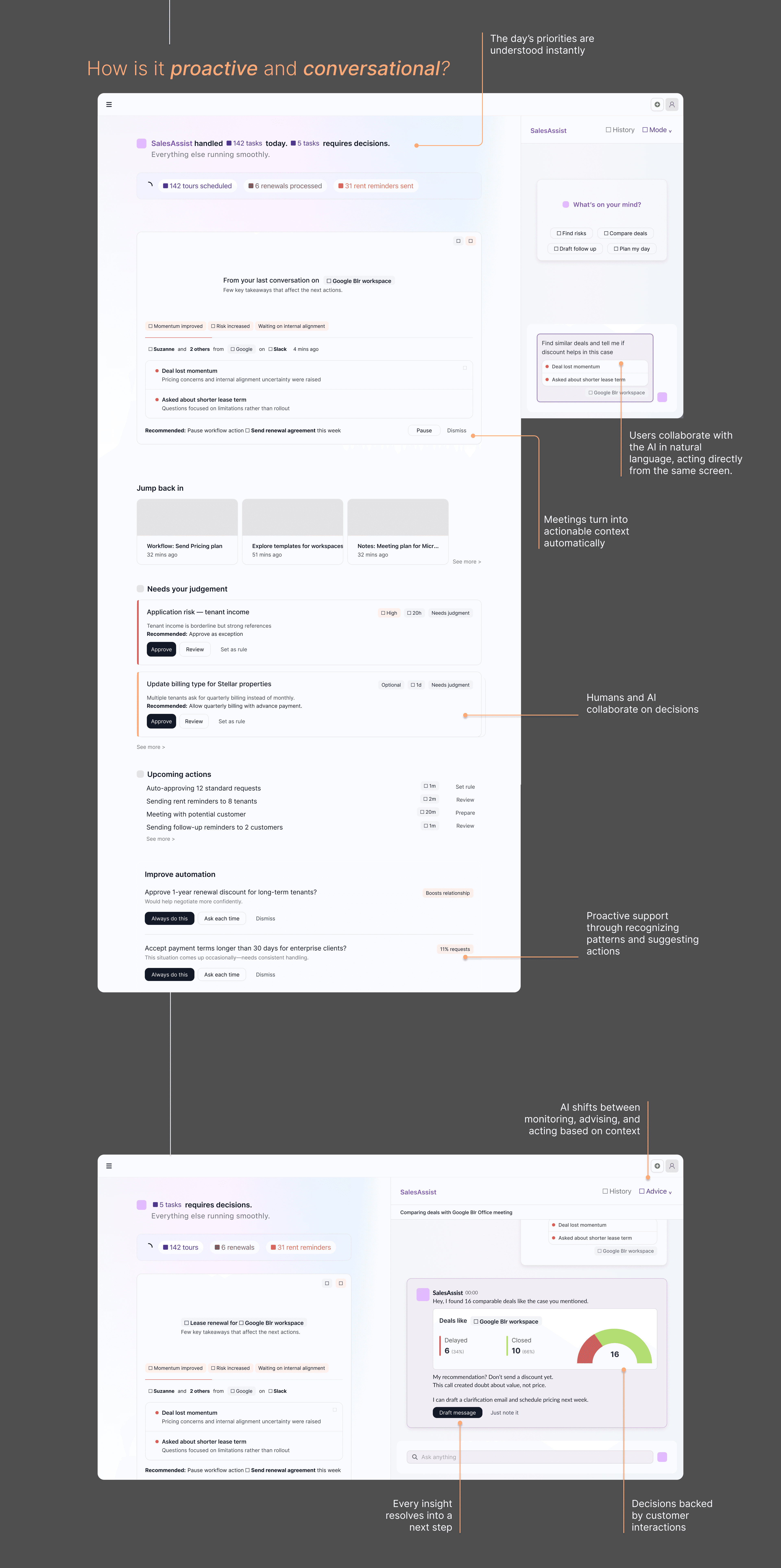
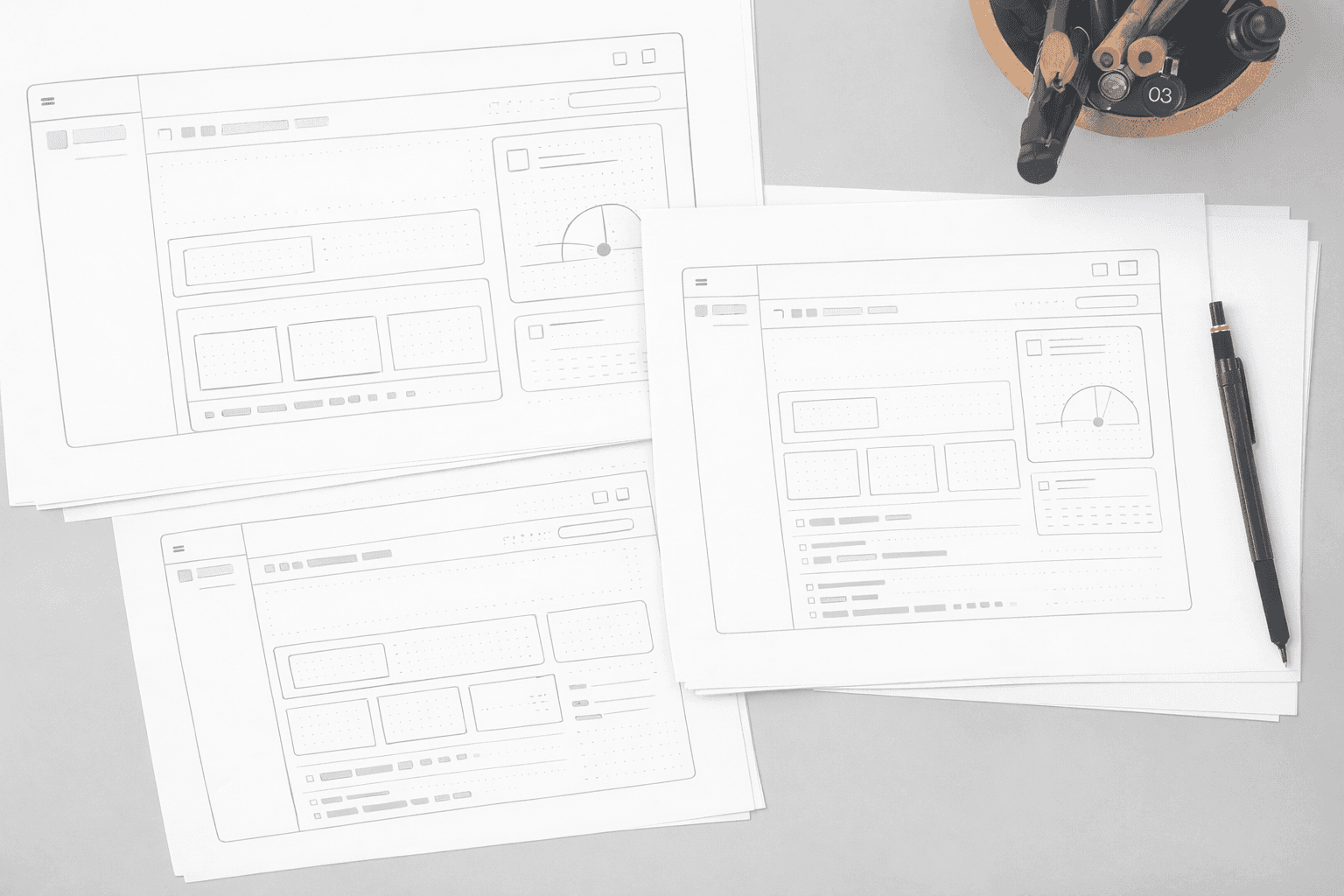
Low-fidelity wireframes for a proactive, conversational real estate CRM
problem
CRMs are built to store interactions, but selling depends on understanding them. Conversations happen across meetings, Slack threads, emails, and informal discussions, while the system waits for users to interpret and update it. Even with automation, the burden of thinking remains, users must notice risk, decide next steps, and manually drive progress. The software records what happened after the fact instead of helping decide what should happen next.
solution
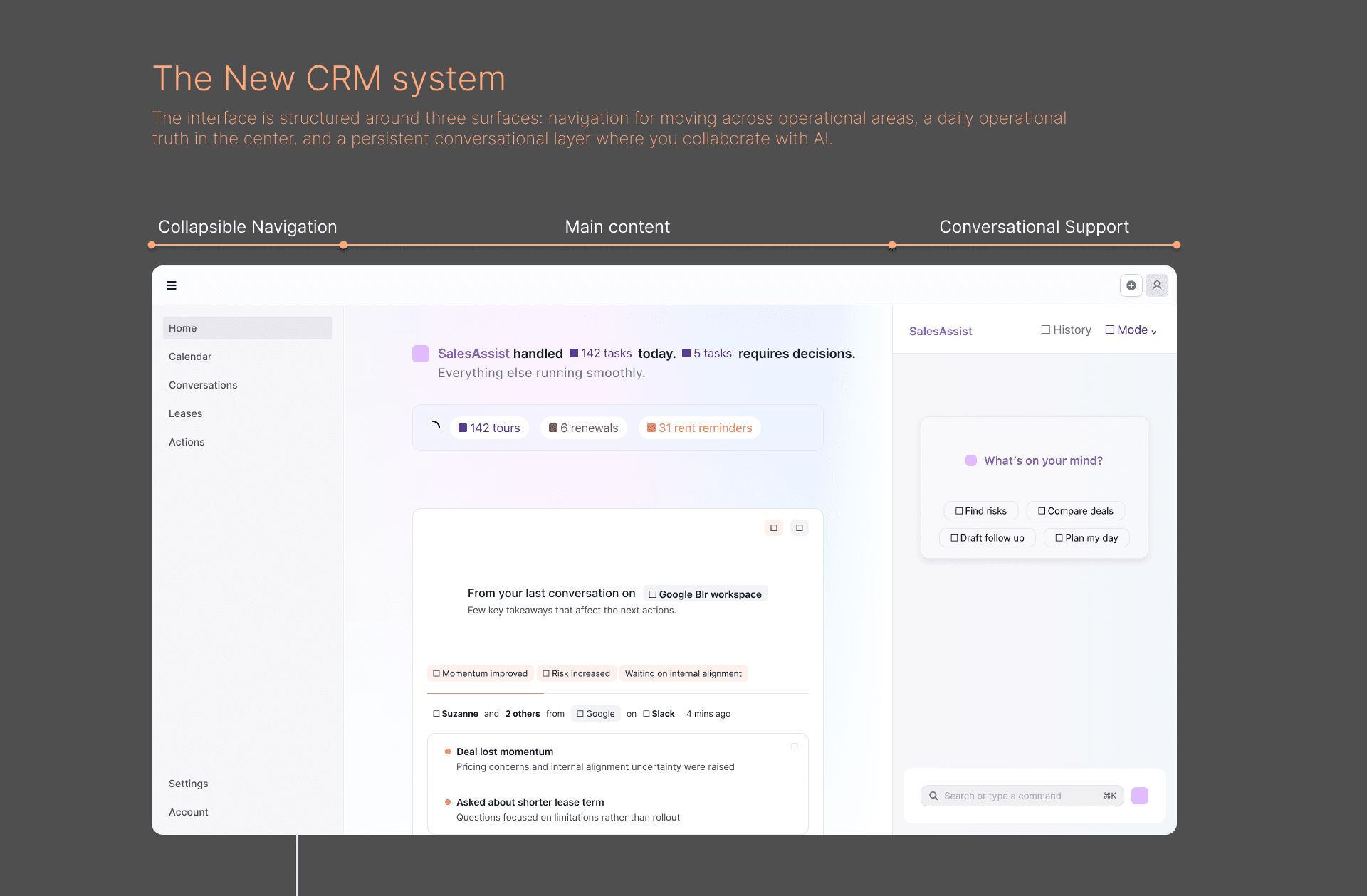
The product reframes the system as an operational partner rather than a database. The assistant watches activity in real time, proactively identifies meaningful moments, and opens a conversational space to investigate context and confirm decisions. Once approved, actions are executed automatically. Instead of managing pipelines, users supervise outcomes while the assistant continuously runs the workflow.
The project aims to define the human control-plane for an AI-native real estate CRM where agents no longer manage pipelines manually, but supervise decisions.
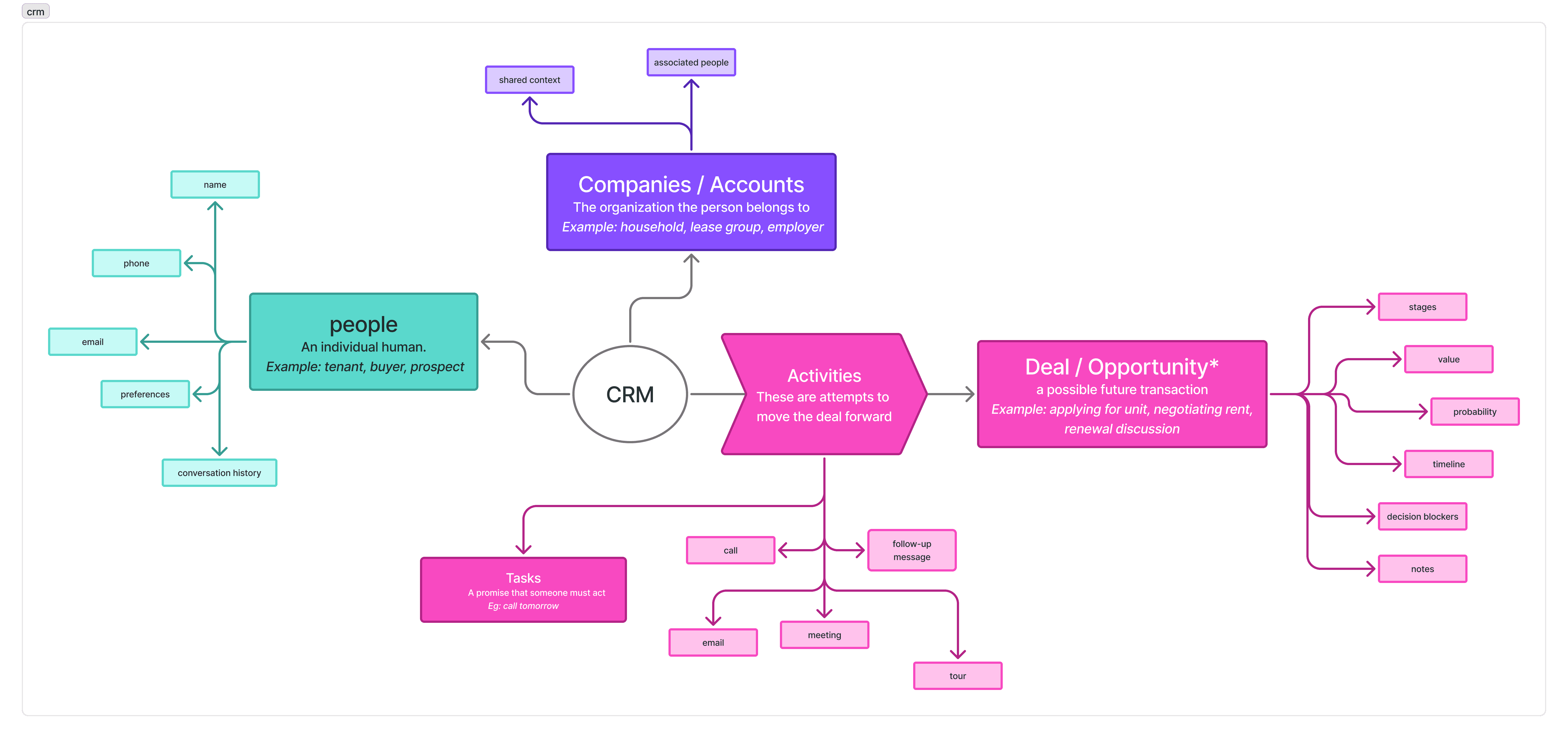
Progress happens through conversations, tours, questions about pricing, negotiation, document exchange, and renewal discussions. Each interaction changes confidence, risk, and intent long before a deal is marked won or lost. Most of this context lives outside the CRM: calls, meetings, WhatsApp messages, emails, and property visits. The following flow illustrates how leasing actually progresses: relationships evolve through interactions, signals accumulate over time, and decisions emerge from context rather than stages.
year
2026
timeframe
48 hours
tools
Figma, ChatGPT, Framer
category
Product design